
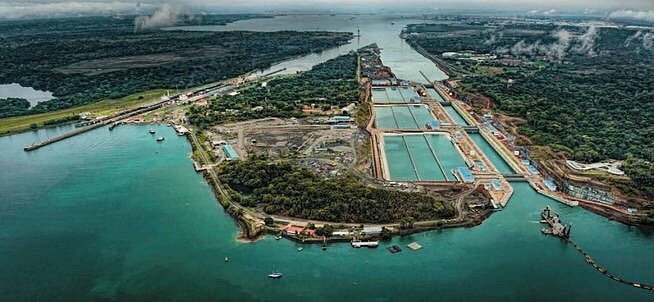
Amid growing geopolitical tensions, security concerns, and disruptions across major shipping corridors, developments surrounding the Panama Canal offer a more constructive and forward-looking perspective for the maritime industry.
The Panama Canal Authority is continuing major modernization efforts focused on improving long-term operational reliability, water sustainability, and logistics capacity. Following severe drought conditions that affected canal transit volumes in recent years, new infrastructure projects are being advanced to strengthen the canal’s resilience against climate-related pressures and rising global shipping demand.
Among the most significant initiatives is the proposed Río Indio reservoir project, designed to secure freshwater supply for future canal operations. Since every vessel transit through the canal requires substantial freshwater usage, water management has become one of the most critical strategic priorities for Panama’s maritime infrastructure.
At the same time, feasibility studies continue for additional logistics expansions and possible future capacity improvements aimed at accommodating evolving global trade patterns and larger vessel traffic.
These developments are particularly important at a time when many major maritime headlines are dominated by instability, conflict, piracy, and trade disruption. While global attention is often focused on crises in the Red Sea, Strait of Hormuz, or other sensitive shipping regions, projects like the Panama Canal modernization demonstrate that parts of the maritime sector are still investing in long-term development, efficiency, and sustainability.
The maritime industry should continue seeing such initiatives as progress rather than solely focusing on disputes over market control, political influence, or strategic competition. Infrastructure development, climate resilience, and operational improvement represent the type of advancement that strengthens global trade systems and benefits the wider international community.
Shipping has always been one of the strongest examples of global interconnection. Therefore, investments that improve maritime infrastructure and operational continuity should be viewed not only as national projects, but also as contributions to the stability and future of international trade itself.
Leave a Reply